

Every sustainability claim should be backed by a lifecycle analysis. Most aren't. Of the ones that are, a significant fraction were commissioned by the brand making the claim, scoped to highlight favourable comparisons, and reported in formats designed for marketing rather than scrutiny.
This is the LCA greenwash problem. Real LCAs exist. They're valuable. They look very different from the marketing version. Here's how to tell them apart, what a credible LCA actually contains, and how KeepCup's LCA practice tries to stay on the right side of the line.
What an LCA Should Be
A lifecycle analysis, properly conducted, follows ISO 14040 and ISO 14044 standards. The methodology is not flexible. The reporting requirements are not flexible. The peer review process is not flexible.
A credible LCA contains:
- A defined functional unit. What the product does, expressed in measurable terms. "One serve of takeaway coffee" is a functional unit. "One coffee cup" is not.
- System boundaries. What's included in the analysis (raw materials, manufacturing, distribution, use, disposal) and what's excluded.
- Inventory data. Quantified inputs (materials, energy, water) and outputs (emissions, waste) across each lifecycle stage.
- Impact assessment. Translation of inventory data into impact categories (CO2-equivalent, water stress, human toxicity, ecosystem damage).
- Interpretation. Conclusions, limitations, sensitivity analysis, comparison with alternative products.
- Peer review. Independent expert review of methodology and conclusions.
A document missing any of these is not a credible LCA. It's marketing using LCA vocabulary.
The Common Greenwash Patterns
Several techniques recur in marketing-grade LCAs. Worth recognising them.
1. Unfair Functional Unit
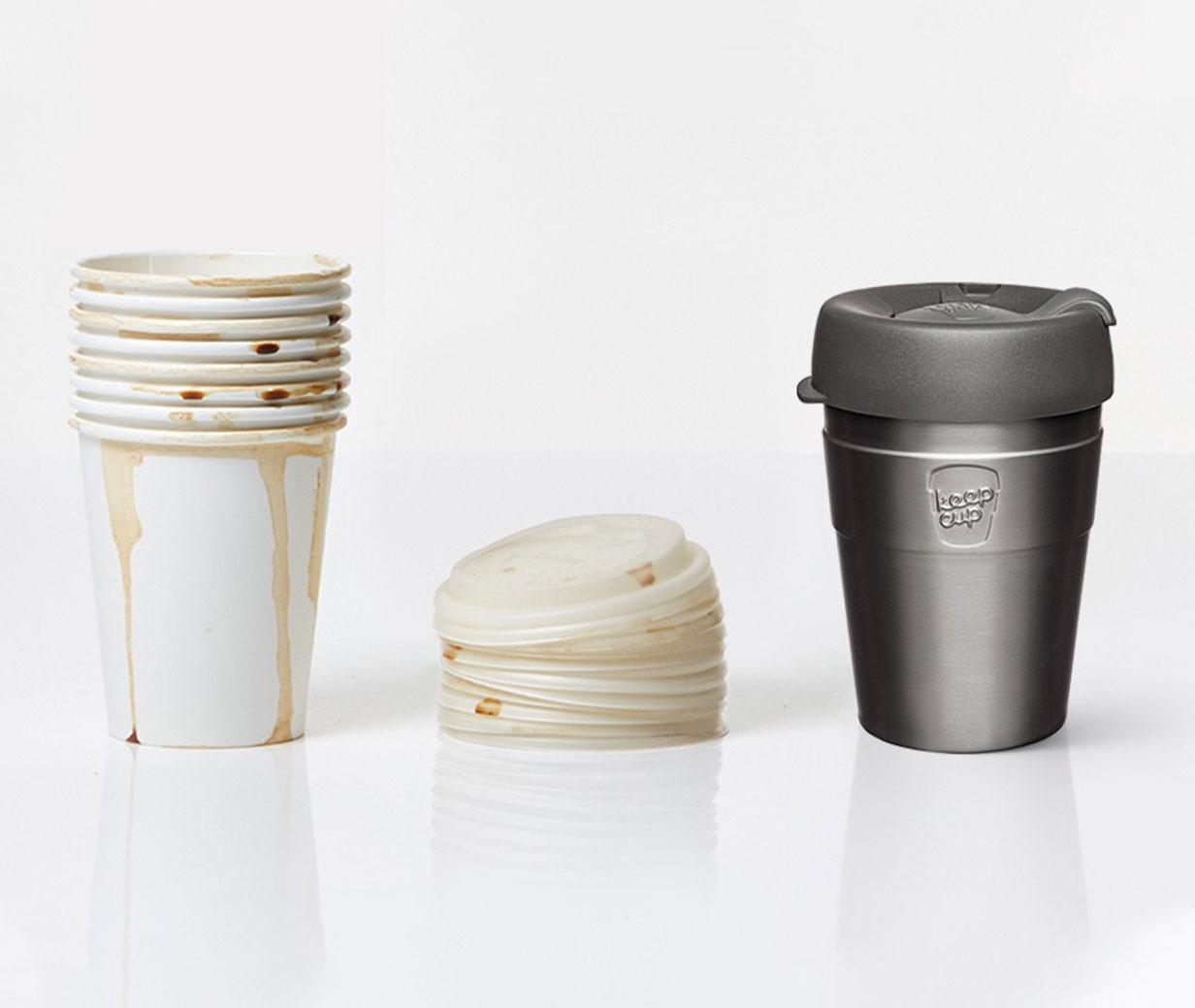
A reusable cup compared against one disposable cup is a meaningless comparison. The reusable replaces many disposables across its lifetime. The correct comparison is reusable vs. equivalent disposable consumption — the lifecycle of disposables that the reusable substitutes for.
Marketing LCAs sometimes compare a reusable's production footprint to one disposable, then conclude the disposable is "better." Always check the functional unit.
2. Cherry-Picked Impact Categories
A product might be better on CO2 emissions but worse on water use. A credible LCA reports both. A marketing LCA reports the favourable one.
The good LCAs report across all major impact categories. The marketing ones don't.
3. Optimistic Use Assumptions
A reusable product's per-use footprint depends on how many times it's used. Marketing LCAs sometimes assume the maximum possible use lifetime, generating impressively low per-use impact figures.
A credible LCA reports sensitivity — what does the per-use impact look like at conservative, central and optimistic lifetime assumptions? KeepCup's LCAs report per-use impact at multiple lifetime assumptions, and our products are tested to 1,000 uses.
4. Missing End-of-Life
Some LCAs stop at the point of sale and don't include disposal. This omits a significant portion of total impact for some products, and overstates the environmental case for others.
A credible LCA is "cradle-to-grave" — covering disposal explicitly. A marketing LCA may stop at "cradle-to-gate" and not say so prominently.
5. Author Independence
An LCA commissioned by the brand making the claim, conducted by a consultancy that depends on that brand for repeat business, with no peer review by independent parties, is structurally compromised.
The structural fix is independent peer review by qualified academic or government experts who don't have a commercial relationship with the brand. KeepCup's LCAs go through this process. Many corporate LCAs don't.
How to Read an LCA Quickly
If you're handed a sustainability claim backed by an LCA, six questions answer most of the credibility question in under five minutes:
- Is the full LCA report publicly available, or just a marketing summary?
- Is the document ISO 14040 / 14044 compliant?
- Has the document been peer reviewed? By whom?
- What is the functional unit?
- What impact categories are reported? All major ones, or just the favourable ones?
- What end-of-life assumptions are used? Realistic to the Australian waste system, or optimistic?
Any "no" answer is a yellow flag. Several "no" answers are a red flag.
What KeepCup's LCA Practice Does
To stay credible, KeepCup's LCA practice operates as follows:
- Conducted by independent consultancies (not in-house).
- Peer reviewed by academic experts in product environmental assessment.
- ISO 14040 and 14044 compliant.
- Full reports published, not just marketing summaries.
- All major impact categories reported — CO2-equivalent, water, energy, human toxicity, ecotoxicity.
- Sensitivity analysis on use lifetime assumptions.
- Realistic end-of-life modelling reflecting actual Australian waste infrastructure.
- Updated periodically to reflect product and supply chain changes.
Each cycle has informed product design decisions — the LCA isn't a marketing exercise, it's the methodology we use to know whether we're getting better or just claiming to.
What This Means for Consumer Decisions
For an Australian consumer evaluating sustainability claims, the LCA test is one of the strongest available. Brands willing to publish full, ISO-compliant, peer-reviewed LCAs are signalling confidence in their data. Brands citing LCAs without publishing the underlying reports are signalling the opposite.
If a brand's product impact claims aren't backed by accessible methodology, the claims should be treated with appropriate scepticism. "Sustainable" is not a verified term. "Lifecycle analysis published in accordance with ISO 14040 and peer reviewed by [named institution]" is.
Where LCA Practice Is Heading
Three trends in LCA practice worth knowing:
1. Real-Time LCA Tooling
New software platforms are making LCA conduct faster and cheaper. The trade-off is that some real-time tools cut corners on methodology rigour. The accessibility is welcome; the lower rigour standard is a concern.
2. Mandatory Disclosure
Several jurisdictions are moving toward mandatory LCA disclosure for product categories. Australia is not currently planning this, but the regulatory direction internationally is toward mandatory rather than voluntary.
3. AI-Assisted Synthesis
AI tools are increasingly used to synthesise LCA findings across product portfolios. The opportunity is faster updates and broader coverage. The risk is loss of methodological rigour as the synthesis becomes less transparent.
Why It Matters to Get This Right
The LCA is the closest thing we have to an honest scoreboard on product environmental impact. If the scoreboard gets corrupted by marketing-grade LCAs sold as the real thing, the entire mechanism for comparing products fails. Consumers lose the ability to choose well. Businesses lose the incentive to improve.
KeepCup's interest in LCA rigour is partly self-interested — we want our products to look good against credible benchmarks. It's also broader: a working environmental comparison system makes the sustainable economy possible. Without it, the disposable economy wins by default.
FAQs
What is a lifecycle analysis (LCA)?
An LCA is a standardised method (ISO 14040 / 14044) for measuring a product's environmental impact from raw materials extraction through manufacturing, distribution, use and disposal. It reports across multiple impact categories.
How can I tell if an LCA is credible?
Six checks: full report publicly available, ISO compliant, peer reviewed, fair functional unit, all major impact categories reported, and realistic end-of-life assumptions for the relevant market.
Are KeepCup's LCAs independent?
Yes. KeepCup's LCAs are conducted by independent consultancies and peer reviewed by academic experts. Full reports are publicly available.
What's the biggest issue with corporate LCAs?
Author independence and selective reporting. LCAs commissioned by the brand making the claim, with no peer review and cherry-picked impact categories, are common in the marketing-grade sustainability literature.







Interview with Jeff Hansen of Sea Shepherd
All I want for Christmas is some old growth forest