

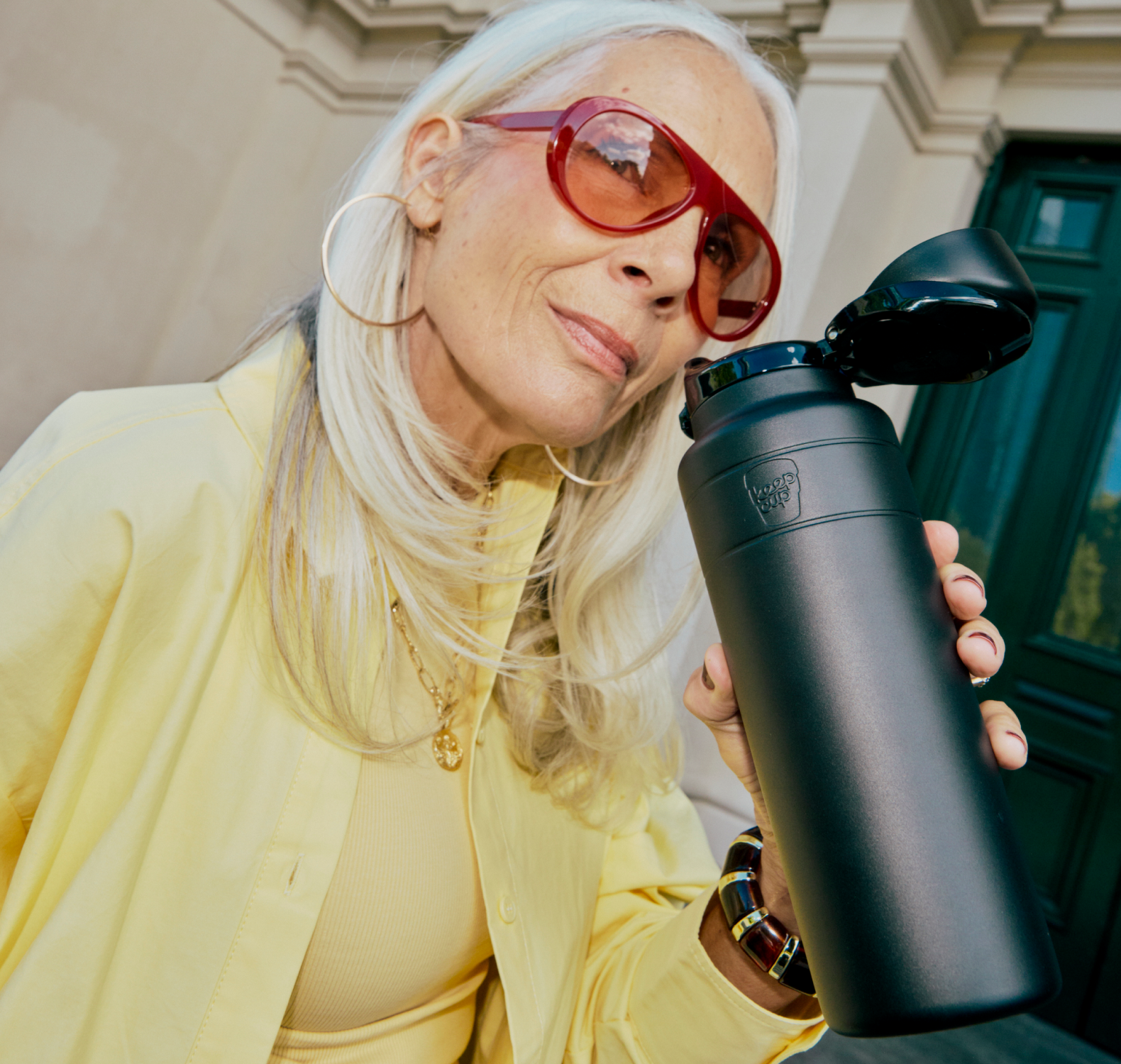
Something has shifted. Over the last decade, reusable bottles have moved from niche eco-statement to everyday staple — spotted on gym floors, office desks, airport trays, and school bags worldwide. The conversation around “reusable is better” is no longer enough. Now, the questions are deeper: which materials actually matter? How long does a bottle need to last to make a difference? What happens to it at the end of its life? And how can a brand ensure it’s genuinely responsible?
This is that conversation. We think it’s worth having.
The Scale of the Single-Use Problem
Before understanding what reusable bottles offer, it’s worth sitting with the numbers.
Globally, one million plastic drinking bottles are purchased every minute. In the US alone, consumption has skyrocketed from 3 billion bottles in 1997 to 86 billion in 2021. Most of these bottles end up where they shouldn’t: only 9% of all plastic ever produced has been recycled, about 12% incinerated, and the remaining 79% accumulates in landfills, dumps, or the natural environment. Roughly 85% of plastic water bottles become waste, much of it reaching our oceans.
Plastic in the ocean is staggering: an estimated 14 million tons of plastic enter seas every year, with 165 million tonnes currently circulating in marine environments. Plastic has been detected as far as 11 kilometres deep — contaminating some of the remotest places on Earth.
The Microplastics Problem
Once in the environment, plastic doesn’t disappear — it breaks down into microplastics and nanoplastics, which have been found in human blood, lungs, and placentas.
Even bottled water, ironically marketed as “pure,” contains plastic. A 2024 Columbia University study found that one litre of bottled water contains an average of 240,000 plastic fragments — 90% nanoplastics invisible to the naked eye (Qian et al., PNAS, 2024).
The Lifecycle Cost of a Single-Use Bottle
The environmental impact doesn’t stop at disposal. It also takes water, energy, and fossil fuels to produce each bottle:
- Producing a 500ml bottled water requires roughly three times the water it contains.
- Its carbon footprint is approximately 82.8 grams CO₂e, mostly from the bottle itself and transport (BIER Roundtable, Carbon Footprint of Bottled Water).
Multiply that by millions of bottles per minute, and the convenience cost becomes colossal.
Why Reusable Bottles Are Better
Switch the equation: one bottle used consistently can displace thousands of single-use bottles.
Lower Carbon Footprint
A reusable bottle refilled twice daily and washed weekly can save roughly 200 kilograms of CO₂e over its lifetime compared to buying bottled water (University of Wisconsin-Madison Sustainability, Grindel 2017). Tap water is even lighter, at 0.28 grams CO₂e per refill — around 1,000 times lower than bottled water.
Less Landfill Waste
Using a reusable bottle saves around 156 single-use bottles per year per person — and the impact scales across households and communities.
Reduced Microplastics
Every single-use bottle avoided is a future microplastic avoided. Reusables don’t clean up existing pollution, but they stop the flow of new plastic into the environment.
Energy & Water Conservation
Producing virgin plastic is resource-intensive. Choosing reusables, particularly those made from recycled or recyclable materials, reduces demand for new plastic production.
Which Reusable Bottle Material Works Best?
Not all bottles are equal. Here’s a breakdown of KeepCup’s core materials:
Stainless Steel
- Durable, recyclable, long-lasting.
- Non-insulated bottles break even vs single-use after 10–30 uses. Insulated bottles take 30–90 uses due to their higher production footprint.
- Stainless steel can be recycled indefinitely, and a bottle used hundreds of times has a negligible per-use impact.
- KeepCup picks: Ora Bottle – vacuum insulated stainless steel, keeps drinks cold 24h / hot 12h, barista-compatible design, built to last years.
Recycled & BPA-Free Plastic (Polypropylene)
- Lightweight, shatter-resistant, long-lasting.
- Break-even occurs within 5–15 uses. Using recycled content improves environmental impact.
- Perfect for active lifestyles, kids, and travel where weight and durability matter.
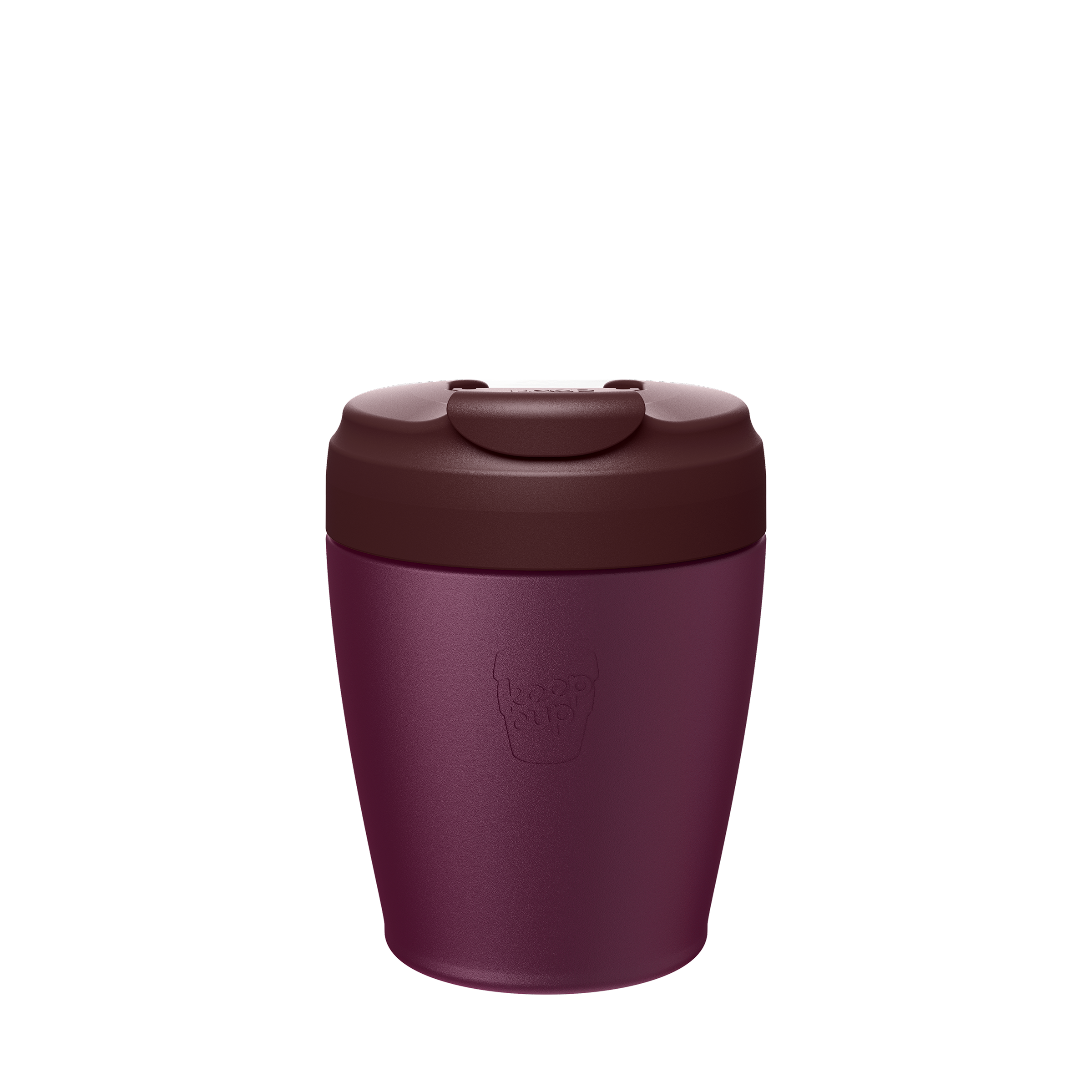
- KeepCup picks: Helix Light Bottle – food-grade polypropylene, equivalent to ~20 single-use lids, designed for years of use, not minutes.
Insulated vs Non-Insulated
- Insulated stainless steel has higher upfront footprint but keeps water cold/hot, reducing temptation for bottled alternatives.
- Non-insulated stainless steel has a lower production cost and breaks even faster.
How Long Does It Take for a Reusable Bottle to "Pay Back" Its Environmental Cost?
Material Break-Even Uses Time to Break Even (2x/day) Stainless Steel (non-insulated) 20–40 uses Less than 4 weeks Stainless Steel (insulated) 30–90 uses 2–6 weeks Recycled plastic ~15–30 uses Less than 2 weeks
Sources: Plastic Education LCA analysis (2023); University of Wisconsin-Madison sustainability research (2017); one5c.com Political Economy Research Institute analysis.
Caring for Your Bottle
Even the best bottle only works if it’s used and maintained:
- Wash daily with warm water and mild soap.
- Deep clean weekly — lids, push buttons, and straws often trap bacteria.
- Replace components rather than the whole bottle — KeepCup’s modular design makes it simple.
A bottle that lasts years has a fraction of the environmental impact per use. To learn more about how to care for your bottle, see our step-by-step bottle cleaning guide.
End-of-Life: Dispose or Recycle Correctly
- Stainless Steel: Fully recyclable, separate from silicone/lids.
- Polypropylene Plastic: Check local recycling, separate components, and consider KeepCup warehouse recycling.
- Silicone: Specialist recyclers only; extend life by replacing parts.
The most sustainable action? Delay disposal as long as possible.
KeepCup’s Approach to Responsibility
- Packaging: 100% cardboard, no plastic sleeves, reuse pallet filler.
- Supply chain: Local manufacturing, sea freight prioritised, solar-powered offices.
- Accountability: Certified B Corp (score 121.8), 1% for the Planet.
- Lifecycle transparency: ISO 14040 LCA publicly available.
- Systemic advocacy: Supported workplaces going single-use free, diverted 8 billion single-use items since 2009.
Reuse done well is more than a bottle — it’s a movement.
FAQs
Are metal bottles eco-friendly?
Yes, when used consistently. Stainless steel breaks even within weeks and lasts for years, displacing thousands of single-use bottles.
Is stainless steel recyclable?
Fully. Separate components and take to metal recycling centres.
Does washing a bottle negate its benefits?
No. Hand or dishwasher washing adds only a small footprint; lifecycle impact remains far lower than single-use alternatives.
Is recycling single-use enough?
Recycling rates are low globally (~9%). Reuse is always preferable — it avoids energy, water, and resource input.
Join the Mission
Choosing a reusable bottle is one of the highest-impact, lowest-effort environmental actions you can take. But the choice doesn’t end there — it matters which bottle, from whom, and for how long.
KeepCup exists to make reuse simple, durable, and effective. Every bottle carried displaces waste and tells a visible story of action.
- Explore the KeepCup Water Bottle range
- Calculate your personal impact with our Impact Calculator
- Read our full Life Cycle Assessment report
- Sign up for the KeepCup newsletter — sustainability thinking, new products, and the ideas worth carrying.
Sources & References
- UNEP (2023). Our Planet is Drowning in Plastic Pollution. unep.org
- CleanHub (2024). How Much Plastic is in the Ocean? cleanhub.com
- Earth Day Network (2024). Fact Sheet: Single-Use Plastics. earthday.org
- Beyond Plastics (2024). Single-Use Plastic Water Bottles. beyondplastics.org
- Our World in Data (2023). Plastic Pollution. ourworldindata.org
- CNN (2024). The World Dumps 2,000 Truckloads of Plastic into the Ocean Each Day. cnn.com
- Condor Ferries (2024). 100+ Plastic in the Ocean Statistics & Facts. condorferries.co.uk
- Qian, N. et al. (2024). Rapid single-particle chemical imaging of nanoplastics by SRS microscopy. Proceedings of the National Academy of Sciences. pnas.org
- Evans, D. / Plastic Education (2023). Reusable vs Single-Use Water Bottles: What's Better for the Environment? plastic.education
- Grindel / University of Wisconsin-Madison Sustainability (2017). Refillable Water Bottles: Research in Progress. sustainability.wisc.edu
- Political Economy Research Institute, UMass Amherst — analysis via one5c.com (2025). Is Your Reusable Water Bottle Really Better for the Planet? one5c.com
- KeepCup / Edge Environment. Life Cycle Analysis (ISO 14040:2006). keepcup.com
- KeepCup (2025). How Much Impact Can You Make with Reuse? keepcup.com
- KeepCup (2022). Why Being Best for the World B Corp is Not Good Enough. keepcup.com
- B Lab Global. KeepCup B Corp Profile. bcorporation.net
- NOAA. A Guide to Plastic in the Ocean. oceanservice.noaa.gov
- National Geographic Education. One Bottle at a Time. nationalgeographic.org



How Much Water Should You Actually Drink? A Science-Backed Hydration Guide
How to Clean a Water Bottle Properly (And Why It Matters More Than You Think)