There's a quiet decision you make every single day — usually before 9am, probably while still half-asleep. You reach for something to drink from. And most of the time, you don't think twice about it.
But the vessel you carry says more than you might expect. It tells the story of how you move through the world: whether you're someone who plans ahead or grabs on the go, whether you care about what ends up in your body, and — increasingly — whether you care about what ends up in the environment.
Here's the uncomfortable truth: over one million single-use plastic bottles are purchased every minute globally, and around 85% of them become waste — in landfills, in oceans, or broken down into the microplastics now found in human blood, lungs and food (UNEP; Earth Day Network). A 2024 Columbia University study published in the Proceedings of the National Academy of Sciences found that a single litre of bottled water contains an average of 240,000 plastic fragments — 90% of them nanoplastics invisible to the naked eye (NIH).
Choosing the right reusable water bottle isn't a minor lifestyle decision. It's one of the most consistent and visible ways you can reduce your footprint — and get a better drinking experience in the process.
In this guide, we cover everything you need to know: the different types of water bottles and their trade-offs, the key features to look for, our recommendations for different lifestyles, and how to keep your bottle in great shape for the long haul.
Types of Water Bottles: What's Actually Different?
Understanding your options is the best place to start. The material a bottle is made from affects how it feels, how it performs, how long it lasts, and what it means for the planet.
Stainless Steel / Insulated
Stainless steel is the gold standard for durability and temperature retention. Double-wall vacuum-insulated bottles can keep drinks cold for up to 24 hours and hot for up to 12, making them ideal for anyone who needs their water cold on a long hike or their tea hot on a long commute.
- Pros: Extremely durable, doesn't impart taste, no plastic contact with your drink, long lifespan (often 10+ years), excellent temperature retention.
- Cons: Heavier than plastic alternatives, higher upfront cost, can dent if dropped, not usually microwave-safe.
- Best for: Gym sessions, outdoor adventures, commuting, travel, everyday use.
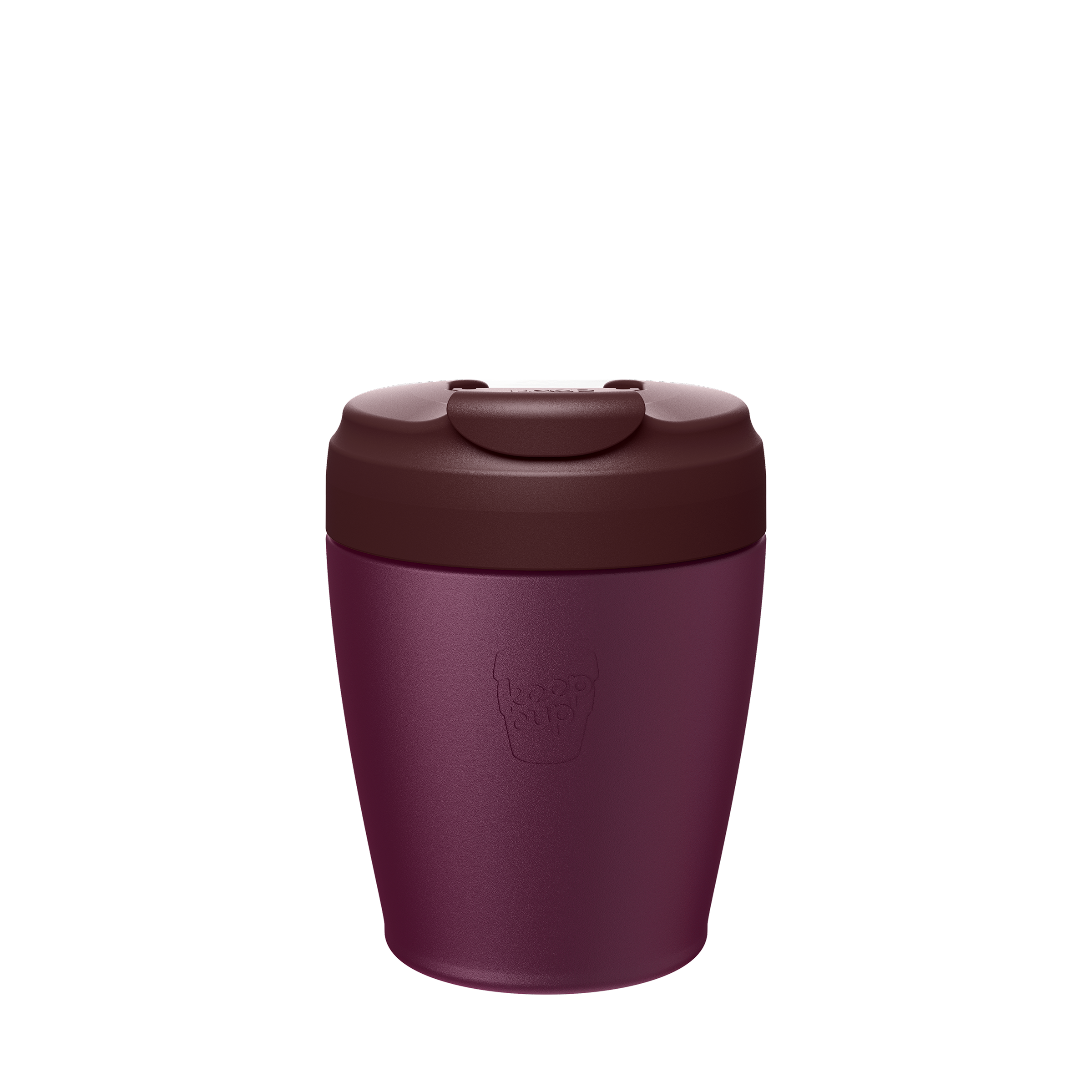
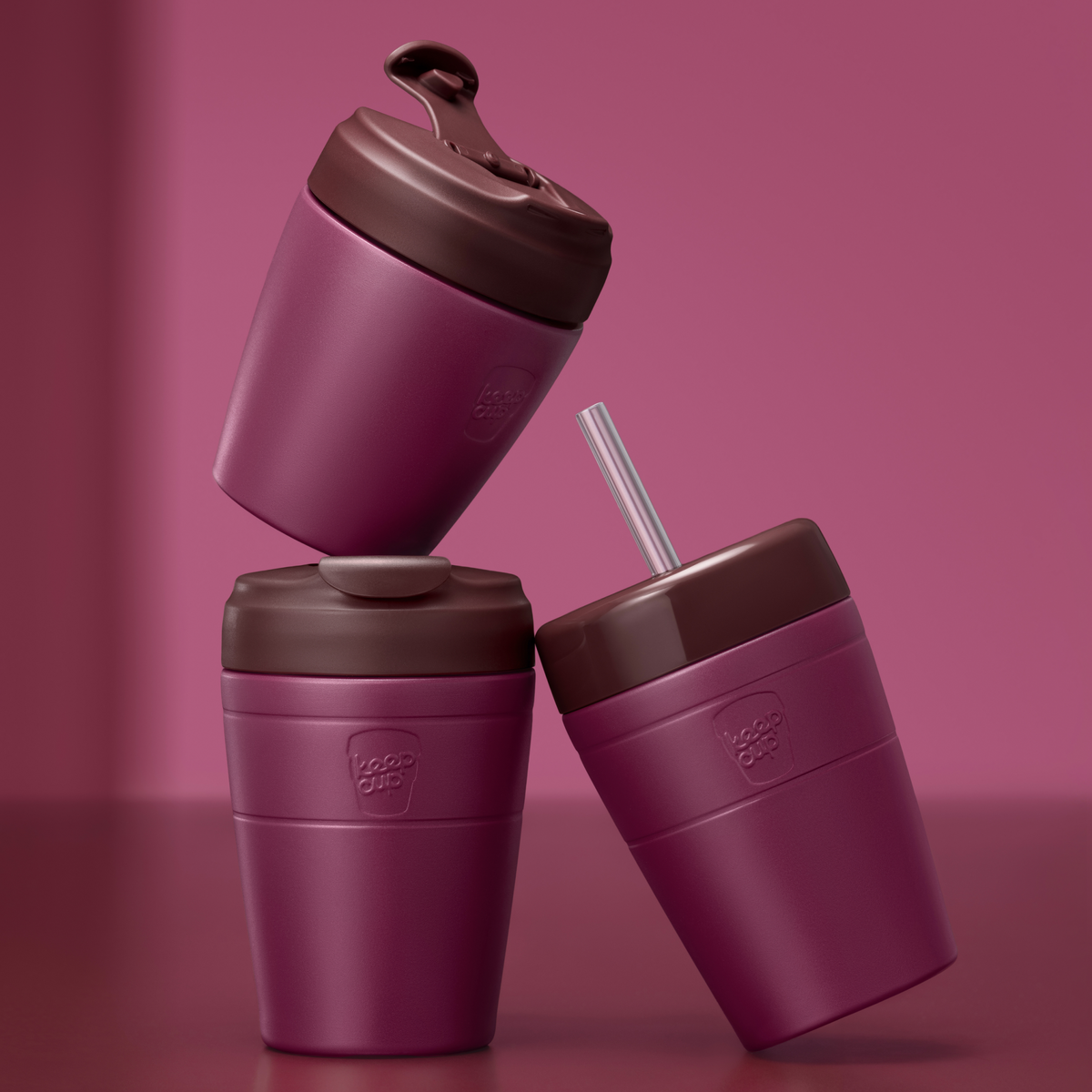
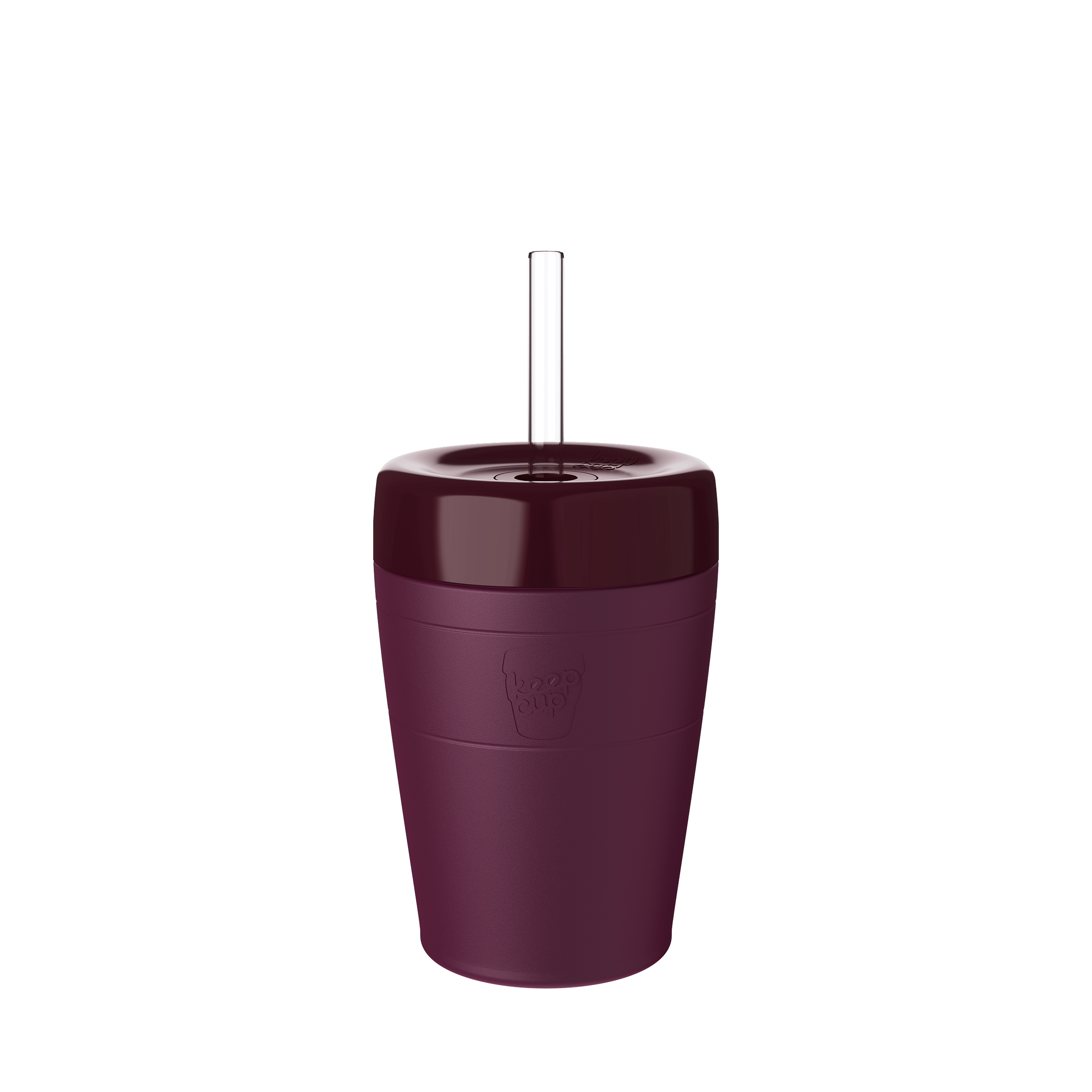
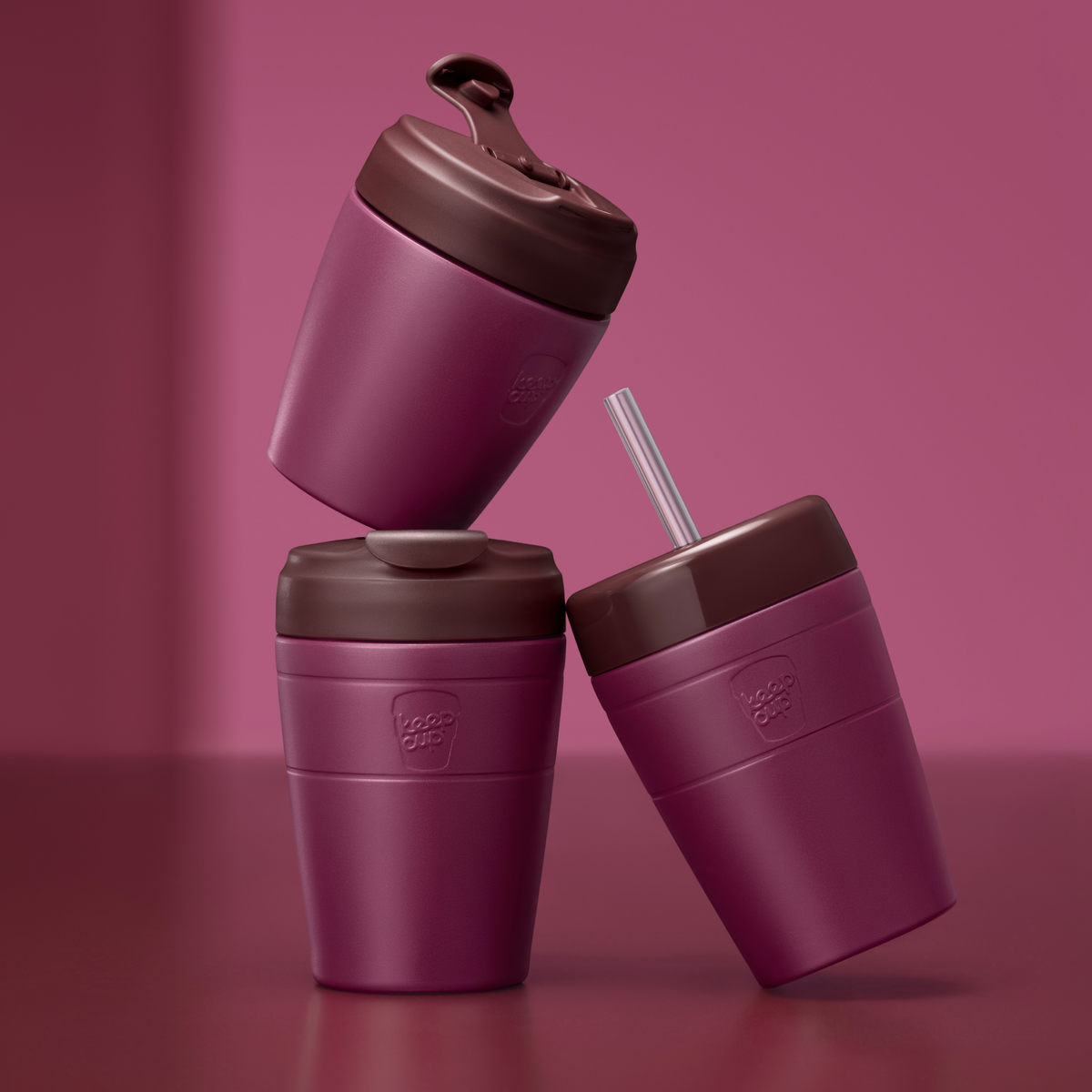
KeepCup pick: The KeepCup Helix Bottle is crafted from double-wall vacuum-insulated stainless steel and designed to carry everything from cold water to hot coffee — built to last, and built with KeepCup's signature design sensibility. In 2025, The Guardian named the KeepCup Commuter the best travel mug overall, recognising its insulation performance, secure flip-lid and barista-compatible design. The Helix Bottle converts your Commuter into a water bottle.
Glass
Glass is the purest option — no chemical interactions, no lingering flavours, and a clarity to the drinking experience that plastic and metal can't quite match. It's the choice for those who value what goes into their body above all else.
- Pros: Taste-neutral, no chemical leaching, easy to clean, doesn't absorb odours, visually beautiful.
- Cons: Heavier, breakable if dropped without a protective sleeve, not ideal for rugged outdoor use.
- Best for: Office use, home, low-impact daily routines, people sensitive to taste or materials.
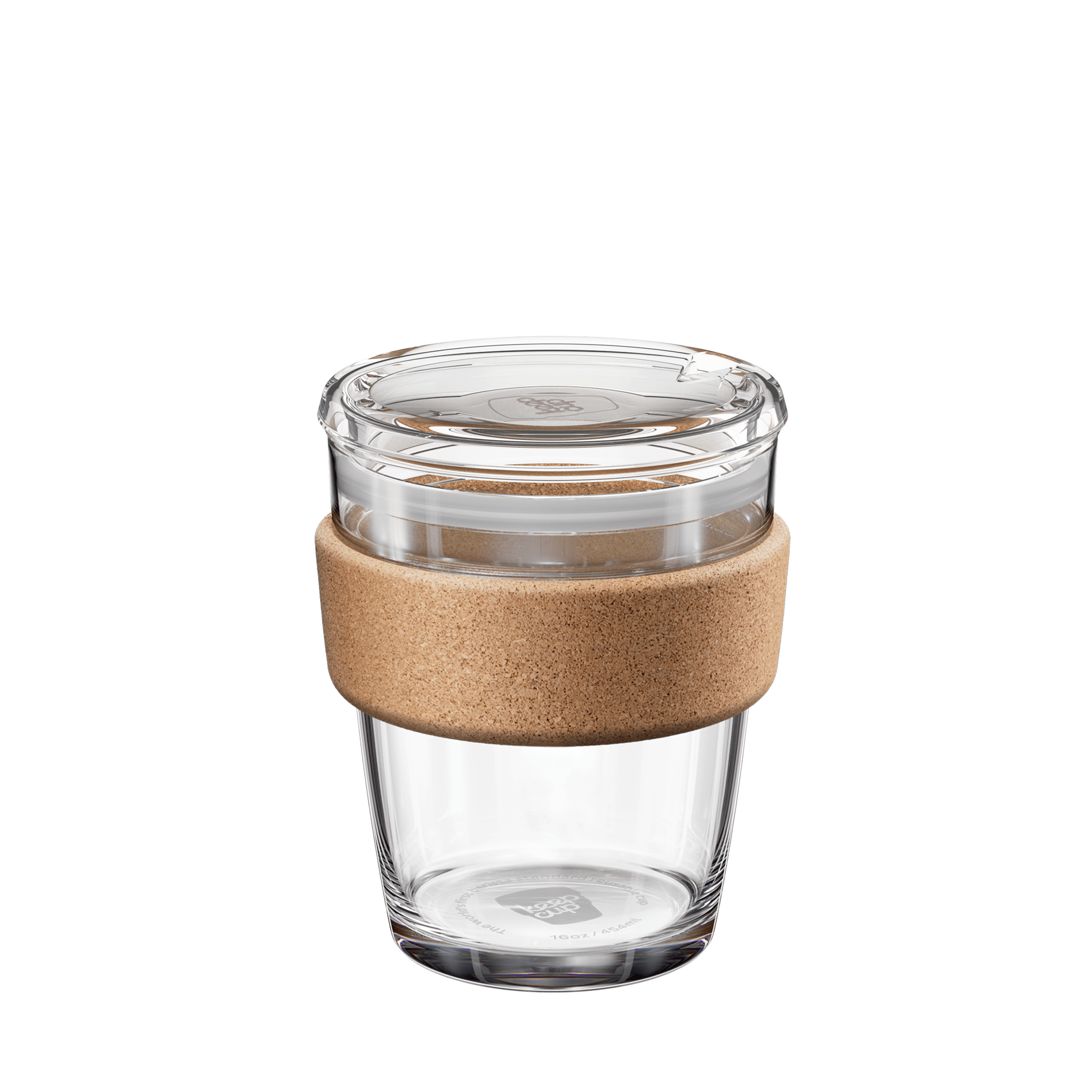
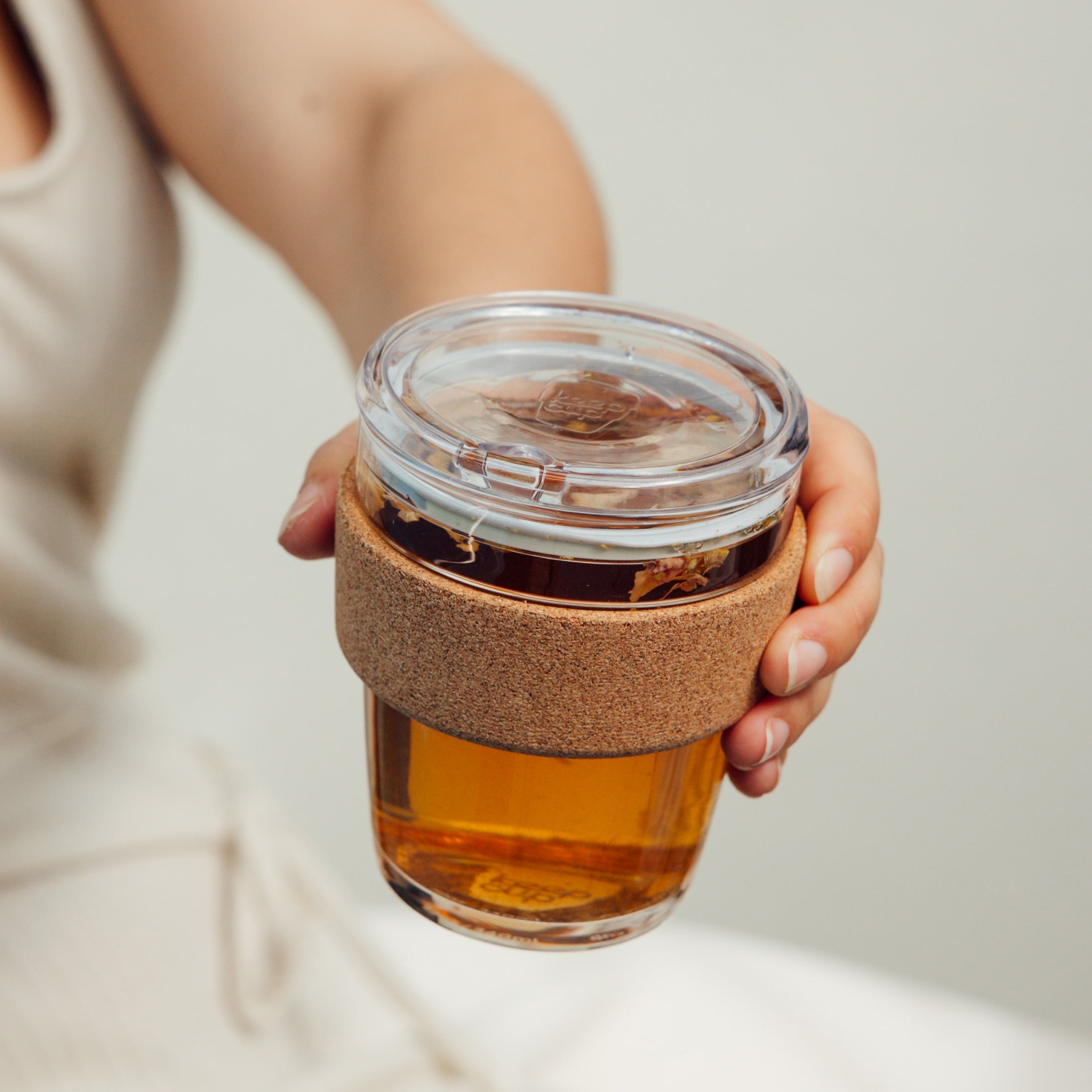
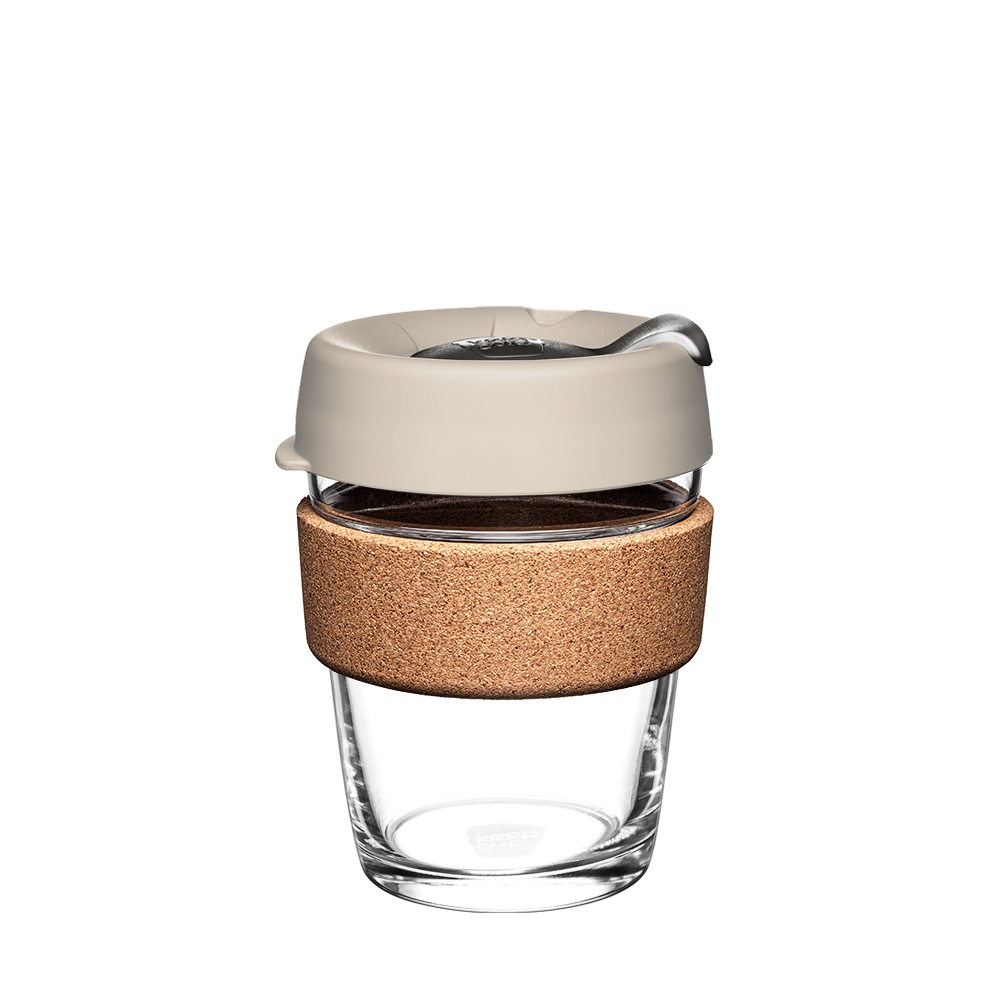
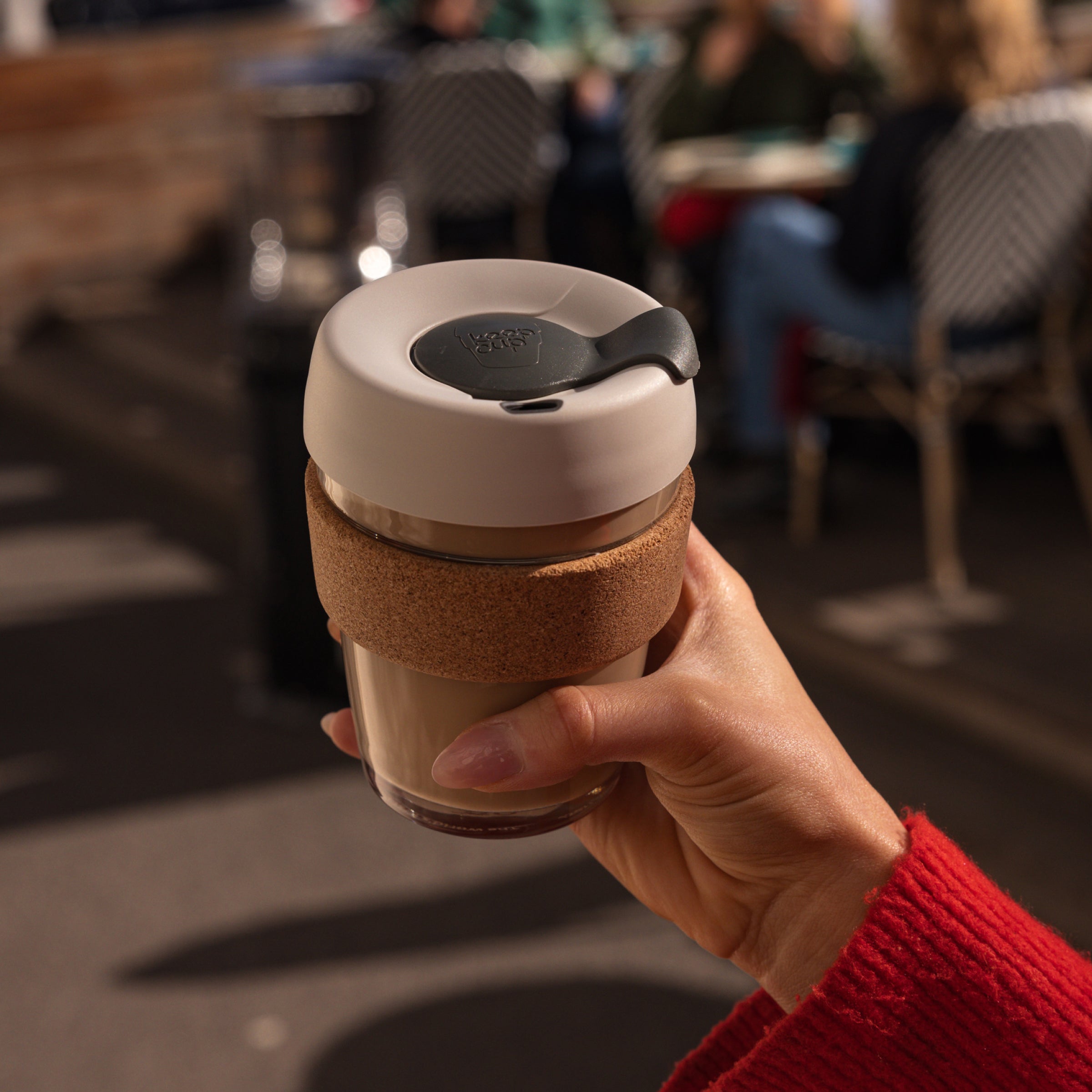
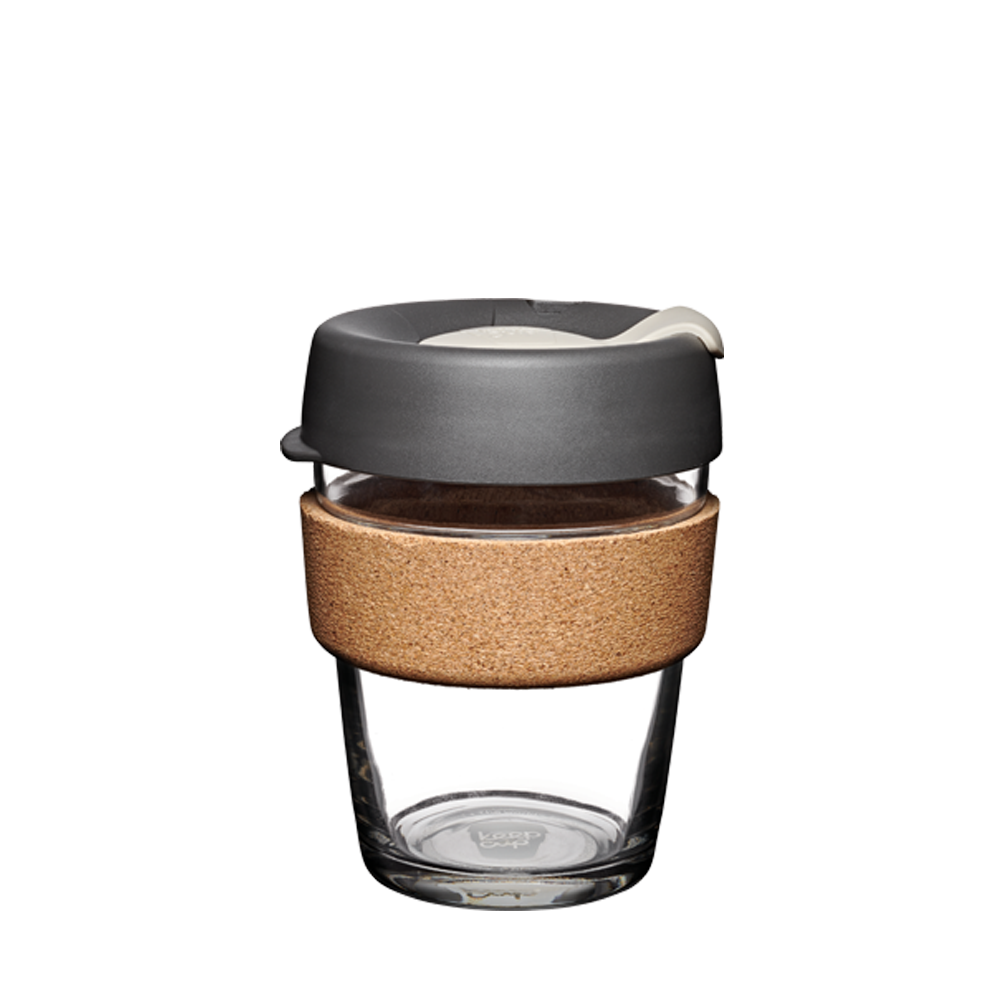
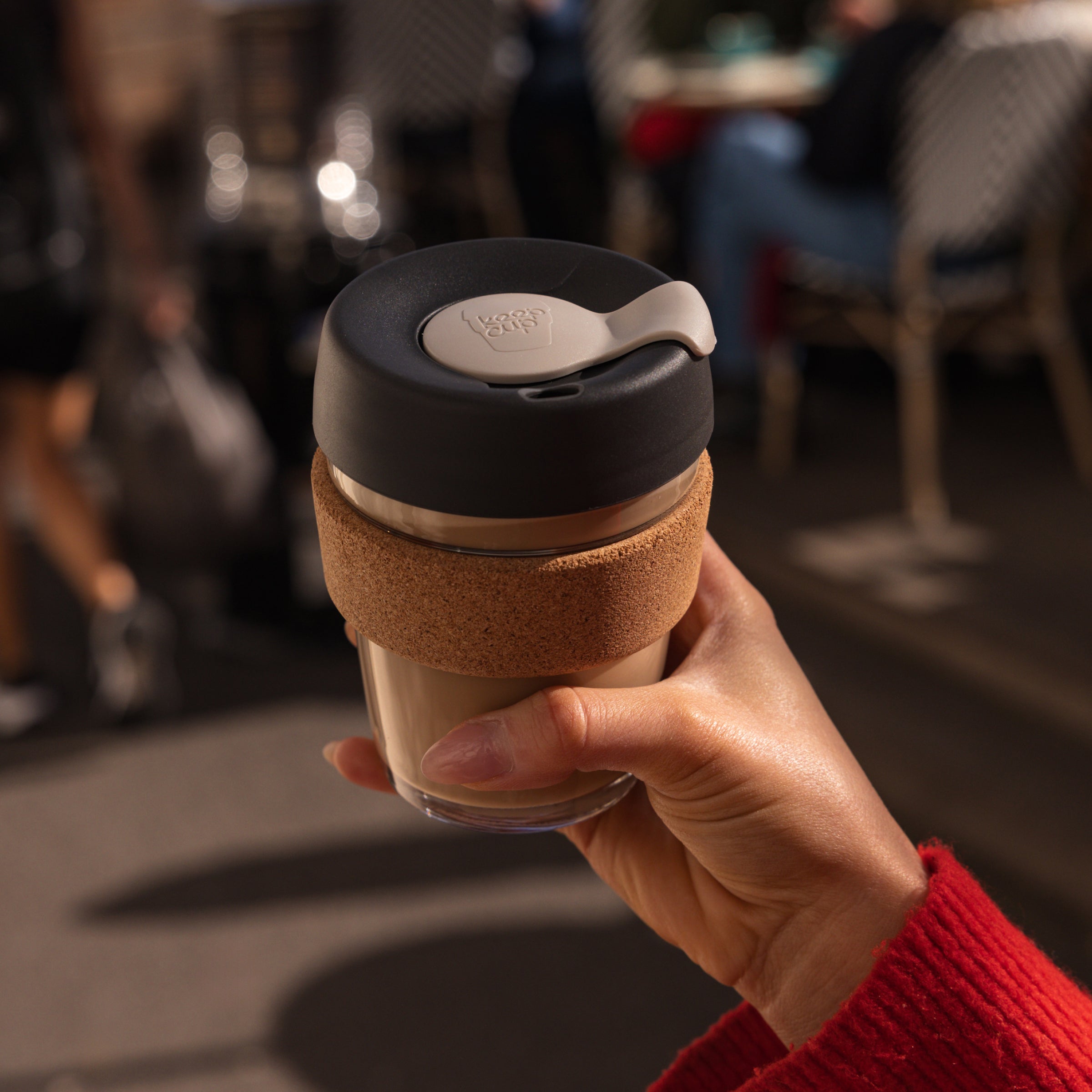
KeepCup pick: The KeepCup Brew Cork — a tempered glass bottle with a natural recovered cork band. Launched in 2014, it became an icon of the conscious consumerism movement and remains one of KeepCup's most loved designs.
BPA-Free Plastic (Reusable)
Not all plastic is equal. High-quality reusable plastic — particularly Tritan or Tritan Renew (made from recycled materials) — offers a lightweight, shatter-resistant option that's significantly better than single-use alternatives. The key is ensuring it's genuinely BPA-free and built to last.
- Pros: Lightweight, shatter-resistant, low cost, easy to carry for high-activity use.
- Cons: Can absorb odours over time, requires careful washing, shorter lifespan than steel or glass.
- Best for: Kids, high-impact sport, travel where weight matters, budget-conscious buyers.
KeepCup pick: KeepCup's Helix Bottle Light range is made from food-grade polypropylene — approximately the equivalent of 20 disposable plastic cup lids worth of plastic, designed to last years rather than minutes.
Key Features to Look For: Your Buyer Checklist
Once you've landed on a material, here's what to evaluate before committing.
Insulation & Temperature Retention
If you want cold water cold all day or hot tea hot on your commute, look for double-wall vacuum insulation. This is the most effective technology available and creates a thermal barrier that significantly slows temperature change. KeepCup's Thermal range keeps drinks cold for up to 24 hours — tested across real-world conditions, not just lab environments.
Capacity & Sizing
Bottle sizing typically ranges from 350ml (12oz) to 1 litre (34oz), and the right size depends on your habits. For desk or café use, 350–500ml is usually plenty and easy to carry. For long hikes, gym sessions or all-day outdoor work, 750ml–1L is more practical. KeepCup offers multiple sizes across all ranges — and a sizing guide to help you find your fit.
Lid Types
Lid design is surprisingly important. The main options are:
- Screw-top / twist cap — Most secure, best for bags and backpacks, slightly slower to open.
- Flip lid — Convenient one-hand operation; ideal for commuters and gym-goers.
- Straw lid — Great for all-day sipping; keep it clean as straws can harbour bacteria.
- Spout/push-button — Offers good flow control; popular for exercise bottles.
KeepCup's lids are designed for single-handed use and an easy, clean pour — because a lid that's awkward to use is a lid you stop using.
Durability
A bottle that chips, dents, or warps after six months isn't a sustainable choice — it's just a deferred single-use purchase. Look for materials with strong track records: tempered glass, high-grade stainless steel, and quality polypropylene. KeepCup's modularity philosophy means that if a component breaks or wears out, you can replace the part — not the whole product. This is a genuine sustainability differentiator.
Weight & Portability
For gym or travel use, weight matters. An insulated steel bottle will always be heavier than plastic, but the trade-off is durability and performance. If you're packing light, a glass or plastic option is worth considering. KeepCup designs across all materials are calibrated for real-world carrying — not just shelf appeal.
Leak-Proof Design
A leaking bottle in a work bag or gym kit is a quick way to ruin your day. Test any bottle before trusting it to your belongings. KeepCup lids are engineered to create a secure seal that holds up to bag life, not just careful handling.
Materials & Sustainability
Beyond the bottle itself, ask: where did the materials come from, and where will they go? KeepCup works with sustainability consultants Edge Environment to assess the full lifecycle footprint of their products. Their stainless steel and glass products use recycled materials; packaging is 100% cardboard with no individual plastic sleeves. As a certified B Corp with a B Impact score of 121.8 (the certification threshold is 80), KeepCup holds itself to independently verified standards — and has been recognised as B Corp Best for the World Honouree in Environment four times.
Dishwasher-Safe?
Glass and many stainless steel bottles are dishwasher-safe, which is both convenient and important for hygiene. Polypropylene and some lid components are best hand-washed to extend their life. KeepCup's product pages specify care instructions per range — always worth checking.
Best Water Bottles by Use Case
Best for the Gym
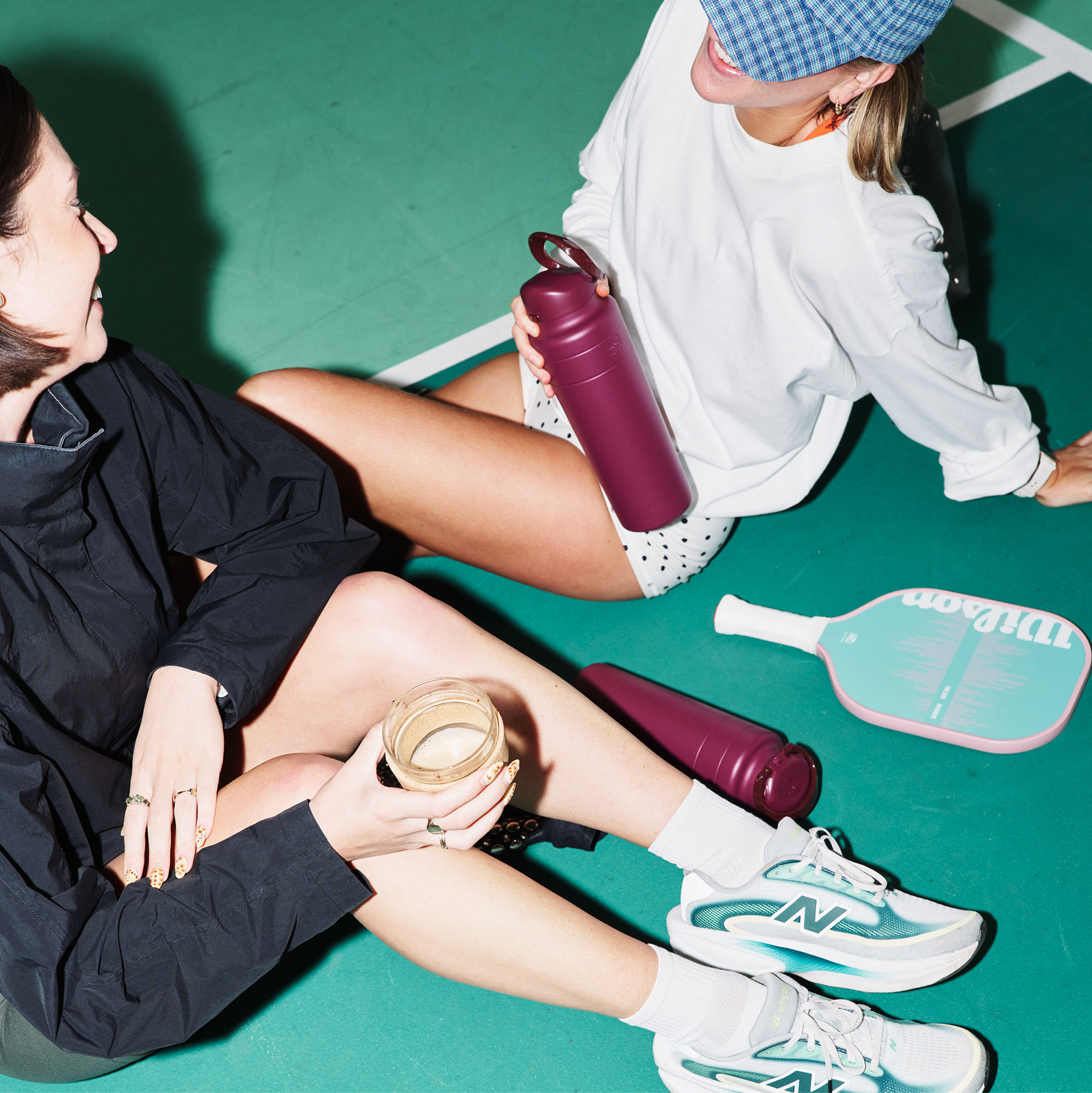
You need something that keeps water cold through a session, doesn't leak in a gym bag, and can survive being set down hard between sets. Stainless steel insulated bottles perform best here — the thermal properties mean your water stays refreshing rather than warm, and the durability handles the knocks of locker-room life. KeepCup Thermal is built for exactly this use.
Key features to prioritise: Double-wall insulation, secure flip or push-button lid, 500ml–750ml capacity, durable construction.
Best for the Office
For desk use, the aesthetic matters as much as the function. You want something that looks at home next to a laptop, doesn't sweat condensation onto your keyboard, and keeps water cool through a long afternoon of meetings. Glass or insulated steel both work beautifully here. KeepCup Brew Cork is a particular favourite for desk life — the tempered glass and natural cork band are quiet, design-conscious, and unobtrusive.
Key features to prioritise: Elegant design, no-sweat exterior (insulated or glass), 350ml–500ml, easy to clean.
Best for Hiking & Outdoors
Outdoors, weight and resilience matter more than aesthetics. You need a bottle that survives being shoved in a pack, knocked against rocks, and refilled from a stream filter. Wide-mouth openings are useful for ice and filter use; high-capacity is often preferred for longer routes. Stainless steel wins here.
Key features to prioritise: 750ml–1L capacity, wide mouth, robust construction, carrying handle or compatible with hydration packs.
Best for Travelling
Travel puts unusual demands on a bottle: it needs to pass airport security empty (then refill easily), survive luggage handling, and work as a multi-use vessel across long transit days. Compact, TSA-compliant, and leak-proof are non-negotiables. The KeepCup Helix was designed with travel in mind — lightweight and configurable for wherever you're headed.
Key features to prioritise: Compact size (350ml–500ml), excellent leak-proof seal, lightweight, easy to refill on the go.
Best for Kids
For children, the priorities are safety, simplicity, and durability. BPA-free plastic is the most practical choice — lightweight enough for small hands, shatterproof, and easy to wash. Lid mechanisms should be simple enough for kids to operate independently. Look for wide openings for easy cleaning and bright, durable colours.
Key features to prioritise: BPA-free materials, lightweight, shatter-resistant, easy-open lid, dishwasher-safe.
Water Bottle Cleaning & Care Tips
The best bottle in the world won't serve you well if it isn't properly maintained. Here's what actually matters.
How Often Should You Wash It?
Daily. Any container used for drinking should be washed with warm soapy water at the end of each day, particularly if used for anything other than plain water. Lids and straws should be disassembled and washed separately — they are the most common areas for bacterial build-up, particularly in narrow channels where airflow is limited.
How to Remove Odours
Odours in bottles are almost always caused by bacteria or residue from drinks other than water. To remove them:
- Fill the bottle with a mixture of warm water and one tablespoon of baking soda. Leave overnight, then rinse thoroughly.
- White vinegar diluted in water (1:1 ratio) is equally effective and safe for all materials.
- For persistent odours in stainless steel, a small amount of denture cleaning tablet dissolved in water can help.
Avoid bleach on stainless steel, as it can damage the surface over time.
Deep Cleaning
For a thorough clean, particularly of lids and straw components, use a small bottle brush or pipe cleaner to reach narrow channels. KeepCup recommends inspecting lids periodically for wear, and replacing components where needed — a worn seal is both a hygiene and leak risk.
For more detail, see our product care guide on the KeepCup website.
The Right Bottle Is the One You'll Actually Use
Choosing the best water bottle comes down to one honest question: what will you actually reach for every day? The most sustainable bottle is the one that replaces the habit of buying single-use plastic — not the one that sits beautifully on a shelf.
At KeepCup, we've spent over fifteen years designing reusable drinkware that people actually carry. From the world's first barista-standard reusable cup to our Thermal and Helix ranges, everything we make is designed with the same philosophy: less complexity, longer life, real-world use.
Reusers divert millions of single-use cups and bottles daily, saving an estimated 8 billion single-use items from landfill each year. Every bottle in our range is part of that effort — and so is every person who carries one.
Ready to find your match?
- Shop the KeepCup range
- Find your size with our sizing guide
- Sign up for the KeepCup newsletter — sustainability news, new arrivals, and reuse inspiration, direct to your inbox.


The KeepCup Gift Guide: Team Picks from our Melbourne HQ
How Much Water Should You Actually Drink? A Science-Backed Hydration Guide