

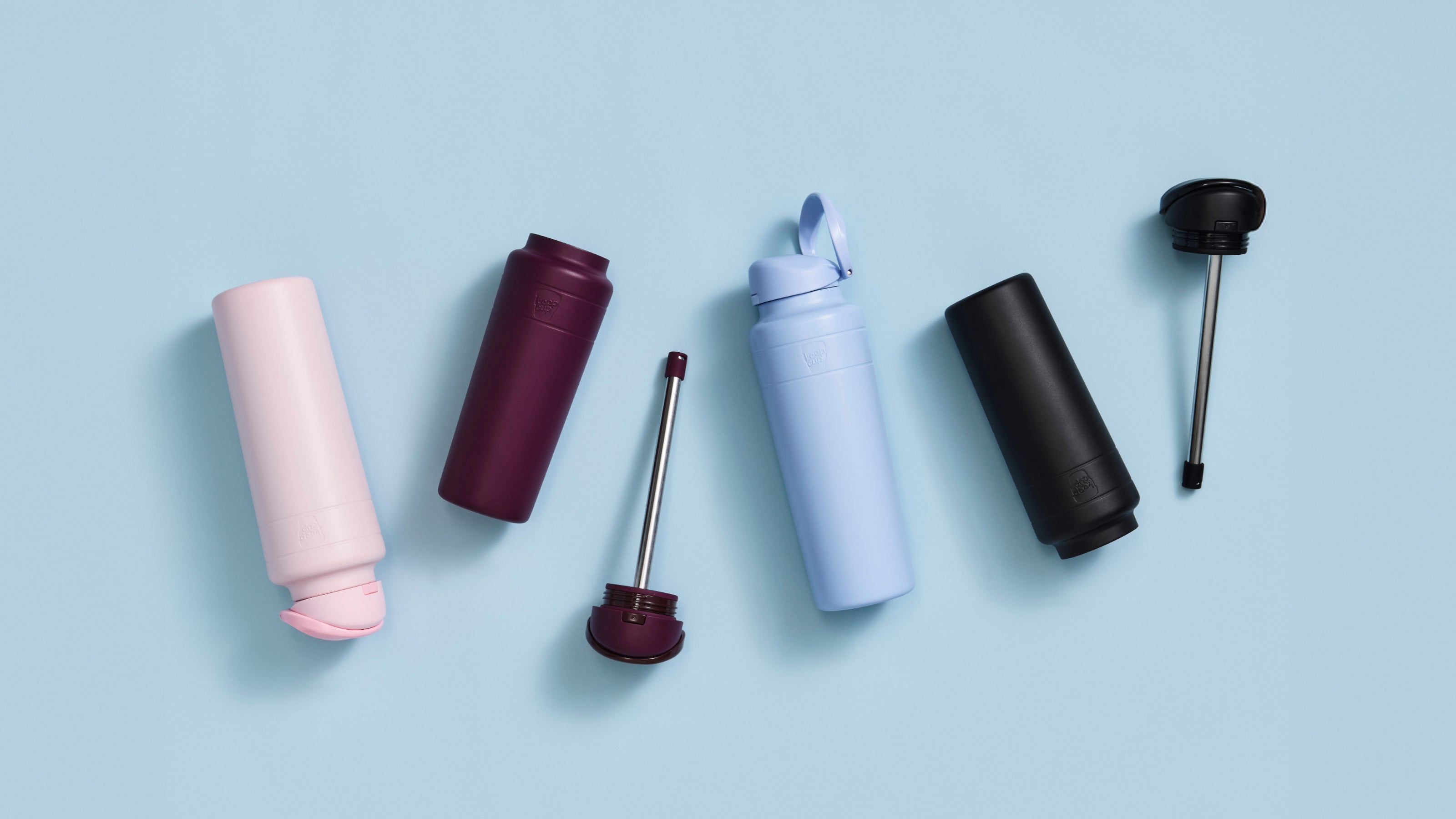
A reusable bottle is only as good as it stays clean. Bacteria, biofilm, and that funky taste that develops after a few weeks of inconsistent washing — these are the failure modes that send most reusables to the back of the cupboard. Cleaning isn't glamorous, but it's the habit that keeps reusable use sustained over years rather than weeks.
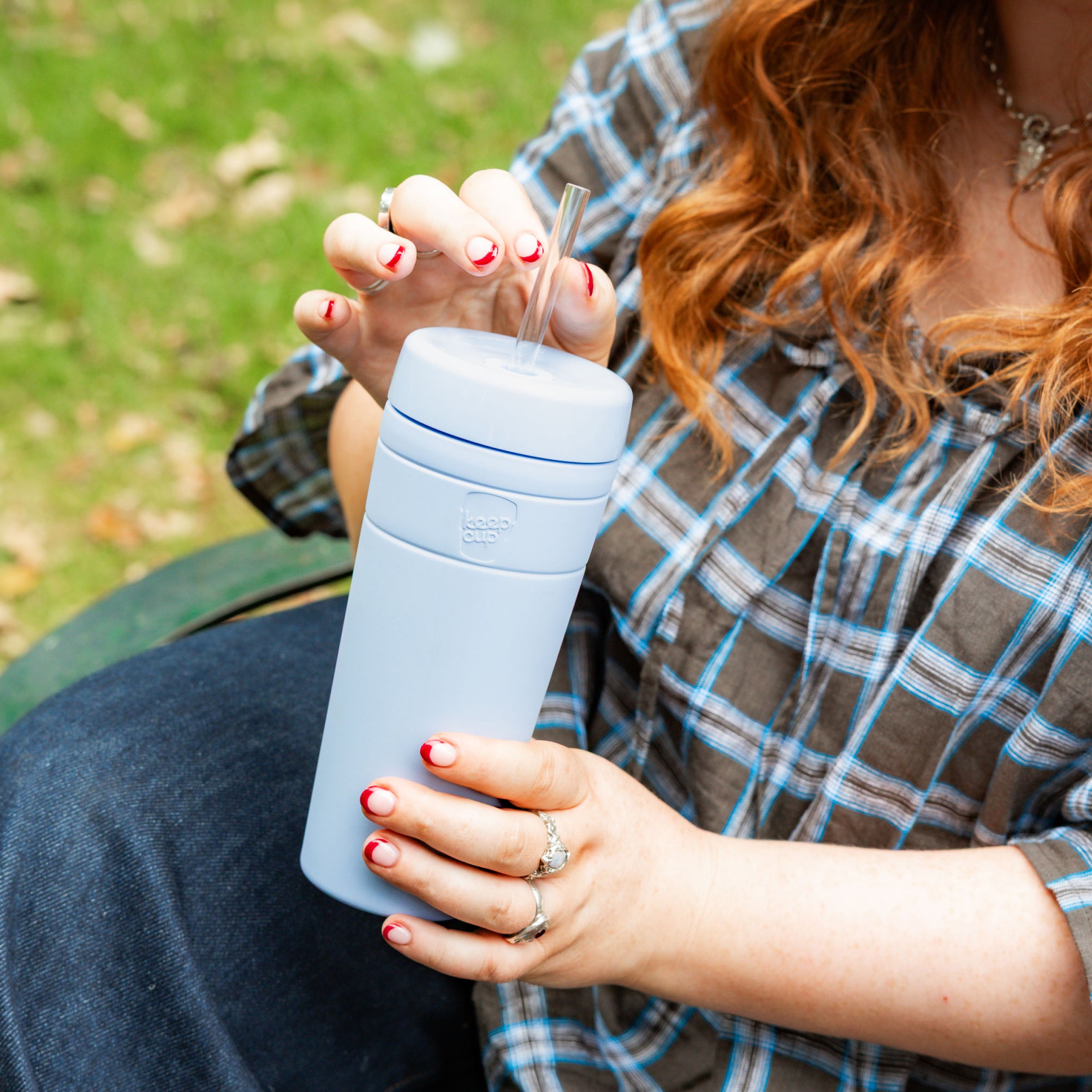
Here's how to clean a reusable bottle properly, what to avoid, and how to keep your KeepCup Ora Bottle (or any insulated bottle) working as designed.
How often should I clean a reusable water bottle?
Daily, lightly. Weekly, properly. Monthly, deep.
- Daily: rinse with warm water and a small amount of dish soap. Inside and out. Let air-dry upright, lid off.
- Weekly: wash with a bottle brush. Get into the corners, the threading, the lid components. Soap and warm water.
- Monthly: deep clean. Disassemble all removable components, soak in warm soapy water, scrub each part.
This rhythm prevents biofilm from establishing in the first place. Biofilm is much harder to remove than it is to prevent.
What should I use to clean my bottle?
For most cleaning: warm water, dish soap, a bottle brush. That's it.
For deeper cleans:
- Baking soda and warm water (a tablespoon per cup of water). Soak for 30 minutes.
- White vinegar diluted with water (1:1). Soak for 15 minutes for mineral deposits.
- Bottle cleaning tablets designed for insulated bottles.
What to avoid:
- Bleach in stainless steel insulated bottles — can damage the interior finish.
- Abrasive scrubbers — scratch the interior, create future biofilm anchor points.
- Dishwasher for lid components with silicone seals — the heat can degrade seals over time.
Can I put my KeepCup bottle in the dishwasher?
The body of the Ora Bottle is dishwasher safe. The lid components are best washed by hand for longest life — the silicone seals last substantially longer with hand washing than dishwasher cycles.
How do I get smell out of an insulated bottle?
Stubborn smell usually means biofilm that hasn't been fully removed. The fix:
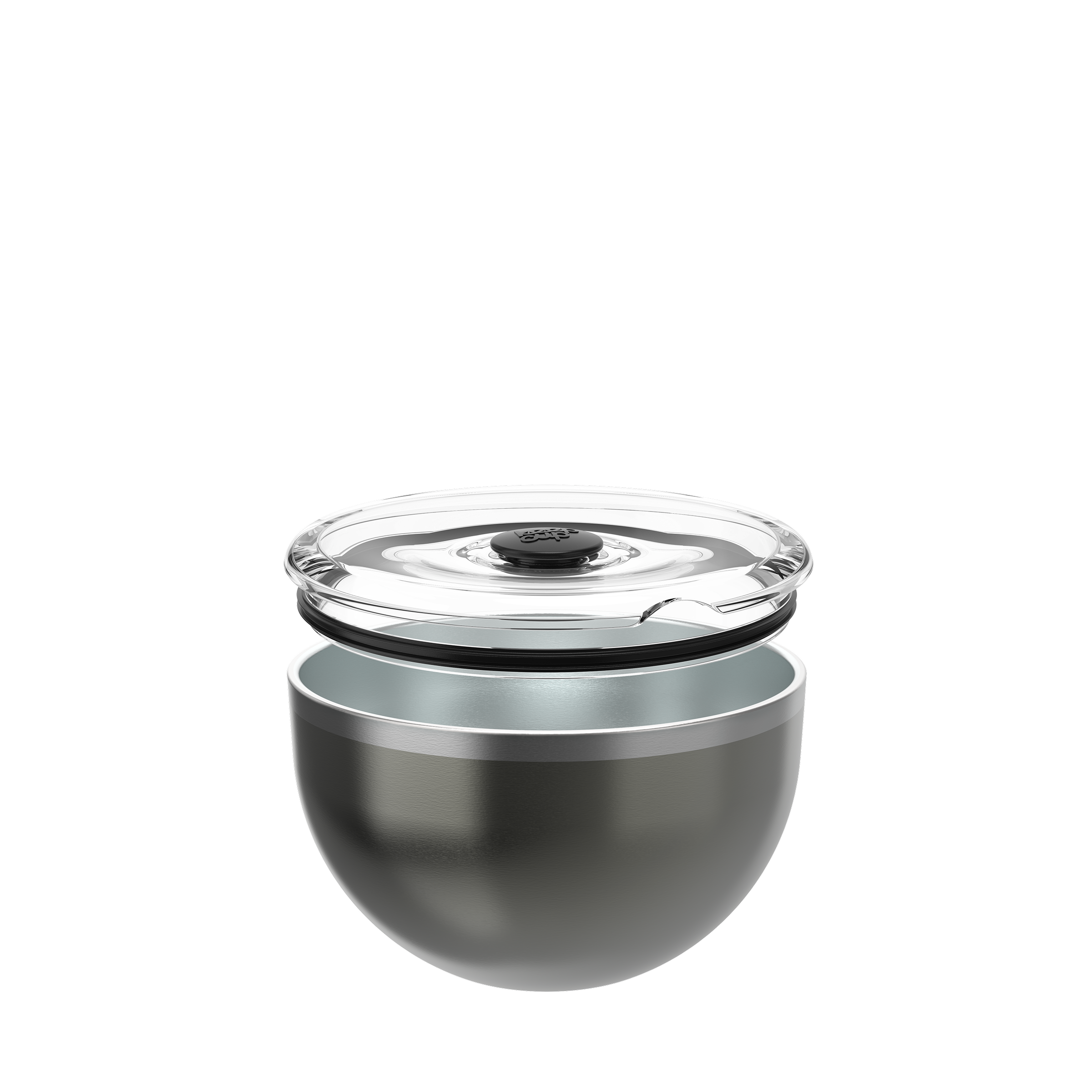
- Disassemble all removable components.
- Soak in warm water with baking soda overnight.
- Scrub thoroughly with a bottle brush.
- Rinse and air-dry upright.
- If smell persists, repeat with a vinegar-water soak.
This sequence removes nearly all common smell sources. If the smell remains after both treatments, the seals may need replacement — silicone components absorb odours over time.
When should I replace lid components?
The silicone seals in any reusable bottle lid have a finite life. Signs it's time to replace:
- The seal has hardened, lost flexibility or developed cracks.
- Persistent smell that doesn't respond to deep cleaning.
- Leakage from the lid when properly sealed.
- Visible discolouration or staining.
KeepCup replacement seals are individually available. The bottle itself continues without needing to be discarded.
FAQs
How often should I clean my reusable water bottle?
Lightly every day, properly each week, deep clean monthly. This rhythm prevents biofilm buildup and keeps the bottle functioning as designed.
Can I use bleach to clean my insulated bottle?
Not recommended. Bleach can damage the interior finish of stainless steel insulated bottles. Baking soda or diluted vinegar are safer for deep cleaning.
How long do KeepCup Ora Bottles last?
KeepCup bottles are tested to 1,000 uses. With replacement seals available, the life of the bottle extends well beyond that.
Are KeepCup replacement seals available?
Yes — silicone seals and lid components are individually purchasable across the KeepCup range.






Your Water Bottle Is One of the Most Powerful Environmental Choices You Can Make
World Refill Day 2026 — The Refill Is the Point